Academic and Professional
Academics and professional development are at the core of the Academy experience. Our co-curricular academic and professional offerings provide opportunities to learn from faculty outside the classroom, as well as from experts in the field. Hands-on activities enable cadets to apply their new knowledge and skills – on campus, within the local community and beyond.
Academic Organizations
The USCGA Student Chapter of the American Society of Civil Engineers (ASCE) consists of cadets enrolled in the Civil Engineering Major. ASCE is a professional membership organization which focuses on:
- Promoting engineering excellence through public policy activities;
- Developing civil engineering positions on public policy issues;
- Integrating and focusing local, state and national ASCE resources to impact public policy efficiently and effectively;
- Maintaining a quick response capability for short notice issues;
- Undertaking agenda-setting and pro-active public policy activities;
- Educating and assisting public policymakers to better understand the engineering impacts of legislative and regulatory proposals;
- Providing coalition-building leadership in order to increase the impact of ASCE’s public policy positions;
- Promoting the understanding and participation of ASCE members in public policy activities.
The USCGA student chapter of ASCE helps introduce cadets to civil engineering in the real world by attendance at chapter meetings and lectures, tours to work sites, and during monthly lunch meetings held on campus. The Chapter is also involved in monthly ethics lectures presented to cadets in engineering majors.
The USCGA student chapter of the American Society of Mechanical Engineers (ASME) consists of cadets enrolled in the Mechanical Engineering major.
ASME helps the global engineering community develop solutions to real-world challenges. Founded in 1880 as the American Society of Mechanical Engineers, ASME is a not-for-profit professional organization that enables collaboration, knowledge sharing and skill development across all engineering disciplines, while promoting the vital role of the engineer in society. ASME codes and standards, publications, conferences, continuing education and professional development programs provide a foundation for advancing technical knowledge and a safer world.
The USCGA student chapter of ASME helps introduce cadets to mechanical engineering in the real world by attendance at chapter meetings and lectures, tours to work sites, and during lunch meetings held on campus.
The American Society of Mechanical Engineers (ASME) Mission:
To serve our diverse global communities by advancing, disseminating and applying engineering knowledge for improving the quality of life; and communicating the excitement of engineering.
The cadets in the ORCA major are all members of the Institute for Operations Research and the Management Sciences (INFORMS) club. This is an international professional society of over 12,500 operations research and analytics professionals and students from all types of organizations including academia, business, government and the military.
More information on the society can be found at www.informs.org.
The Institute of Electrical and Electronics Engineers (IEEE) branch at the Coast Guard Academy consists of all members of the Electrical Engineering Major. This student-run body typically meets monthly for a lunch meeting where guest speakers have included US Coast Guard Astronaut and CGA EE graduate CAPT Burbank, representatives from the Coast Guard’s Command and Control Engineering Center (C2CEN) and other Coast Guard Centers of Excellence, as well as distinguished Professors from other Electrical Engineering programs. IEEE meetings also function as a meeting place for all EEs at the CGA. Most recently a Robotics group has been started from a small group of the members of IEEE at CGA. This group intends to expand its members and functions to build robots to compete in various national robotics competitions.
The Institute of Electrical and Electronics Engineers (IEEE) is the world’s leading professional association for the advancement of technology.
IEEE is the leading authority on areas ranging from aerospace systems, computers and telecommunications to biomedical engineering, electrical power and consumer electronics.
IEEE has more than 370,000 members in over 160 countries.
The Model United Nations Club provides cadets with opportunities to explore international affairs, diplomacy, and global security challenges through simulated United Nations conferences. Members strengthen their research, public speaking, negotiation, and leadership skills while representing the Academy in regional and national Model UN competitions.
The USCGA Student Chapter of the Society of Naval Architects and Marine Engineers (SNAME) consists of cadets enrolled in the Naval Architecture and Marine Engineering major as well as interested cadets from other majors. SNAME is dedicated to advancing the art, science and practice of naval architecture, shipbuilding and marine engineering; encouraging the exchange and recording of information; sponsoring applied research; offering career guidance; supporting education and enhancing the professional status and integrity of its membership.
The student chapter serves as a link between the academic rigor of the Academy and real-world engineering advancement. As members of the chapter, cadets have had the opportunity to attend professional engineering conferences, including the 2007 SNAME Maritime Technology Conference held in Fort Lauderdale, Florida, as well as local SNAME meetings, including those held in Jamestown, Rhode Island. The section has visited the Rolls Royce propeller production facility in Walpole, Massachusetts, to experience the scale of production and engineering involved with propeller manufacturing. Further, the group hosts guest speakers, most recently Mr. Peter Noble of Conoco Philips Inc., who presented an arctic tanker design and construction topic in November. The Chapter is also involved in monthly engineering ethics lectures, for cadets involved in engineering majors at the Academy.
The Society of Naval Architects and Marine Engineers (SNAME) is dedicated to advancing the art, science and practice of naval architecture, shipbuilding and marine engineering. Its scope includes all aspects of research, production, maintenance and operation of ships, submersibles, yachts, boats, offshore and ocean bottom structures, hydrofoils & surface effect ships. SNAME was founded in 1893 and has over 10,000 members in the US, Canada and overseas.
The Cadet Management Association is a student-run organization designed to enhance the business acumen of Management majors at the United States Coast Guard Academy. As an AACSB-accredited major, Management cadets graduate with an advanced education in financial management, human resource management, information technology management and leadership. The CMA’s purpose is to introduce cadets to the business world outside the classroom, both within the Coast Guard and in the corporate world. Through keynote speakers, networking events, and site visits, the CMA aims to holistically develop the interests and future goals of each management cadet to prepare them for their future career.
Service Readiness Organizations
Ready to take your passion for the skies to the next level? The Academy Aviation Club offers cadets hands-on experience in the world of flight, from mastering maneuvers on advanced flight simulators to exploring the fundamentals of aerospace engineering and navigation. Members connect with military and civilian aviators, gain insights into the aviation career path, and build foundational skills crucial for future flight school success. Whether you are aiming for a slot in flight school or just fascinated by aviation technology, this club is your launchpad for a high-flying future.
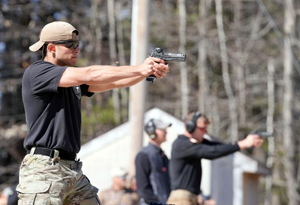
The Mission of the USCGA Combat Arms team is to establish the fundamentals of weapons handling skills which will be showcased in IDPA, USPSA, and three-gun competitions. These skills prove to be invaluable to members pursuing roles as boarding officers and Coast Guard Deployable Special Forces operators.
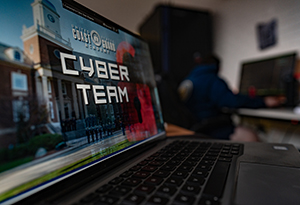
The Cyber Team provides cadets with opportunities to develop and apply cybersecurity, networking, and information technology skills through hands-on training and competitive events. Members collaborate to solve complex technical challenges, enhance critical thinking abilities, and represent the Academy in regional and national cyber competitions.
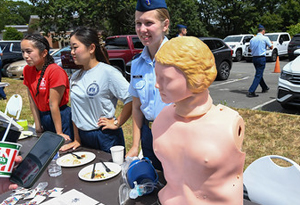
The purpose of the Cadet Emergency Medical Services (EMS) is to provide first responder education and experience for cadets and provide competent emergency medical support to the Academy and the greater New London community. The Cadet EMS Club continues to help train cadets as national Registry EMTs and First Responders, host medical training and enable qualified members to volunteer on and off base. As of recently, the EMS club did a TCCC (Tactical Combat Casualty Care) Trip to the Naval Academy to get TCCC Level 1 certifications.
The Flight Team offers cadets opportunities to expand their knowledge of aviation through flight training, aerospace education, and collegiate competition. Members develop technical proficiency, leadership, and decision-making skills while strengthening their understanding of the aviation profession and representing the Academy in flight-related events.
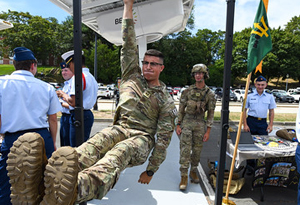
The Sandhurst Club participates and competes in service academy competitions pertaining to tactical interdiction and law enforcement including weapons marksmanship of M4 rifles and M9 pistols. In addition, Sandhurst completes team physical training exercises including strength workouts, long-distance running, and obstacle negotiation in advanced Interdiction Uniforms (AIUs). Moreover, Sandhurst Club represents the U.S. Coast Guard academy at the international and inter-service Sandhurst Military Competition held annually at the U.S. Military Academy (USMA) in West Point, NY.